
Role: Concept, Research, UX, UI, Branding, Interactions, Visuals
Skills: Product Design, UI/UX Design, Wireframing, Prototyping, Figma
Duration: July – September 2022
Project
myTBR is a literary service that primarily matches readers to their next book. Focusing on pre-pinned novels, myTBR inspires readers to finish their “to be read” list by matching readers with their a novel from their self after answering a select few questions.
Challenges
- Create a mainstream questionnaire platform.
- Explore users’ pinned reads seamlessly.
- Allow readers to focus on their pinned reads.
- Eliminate barrier to entry on application startup.
Brainstorm
First and foremost, I was curious as to what the main competitors were. There are many book-recommending platforms, but all seem to function on a broad scale rather than a personalized list. In order to progress, I needed answers to the following questions:
Who are our biggest competitors?
What does the product contribute?
What challenges could we face moving forward?
Preliminary Ideation
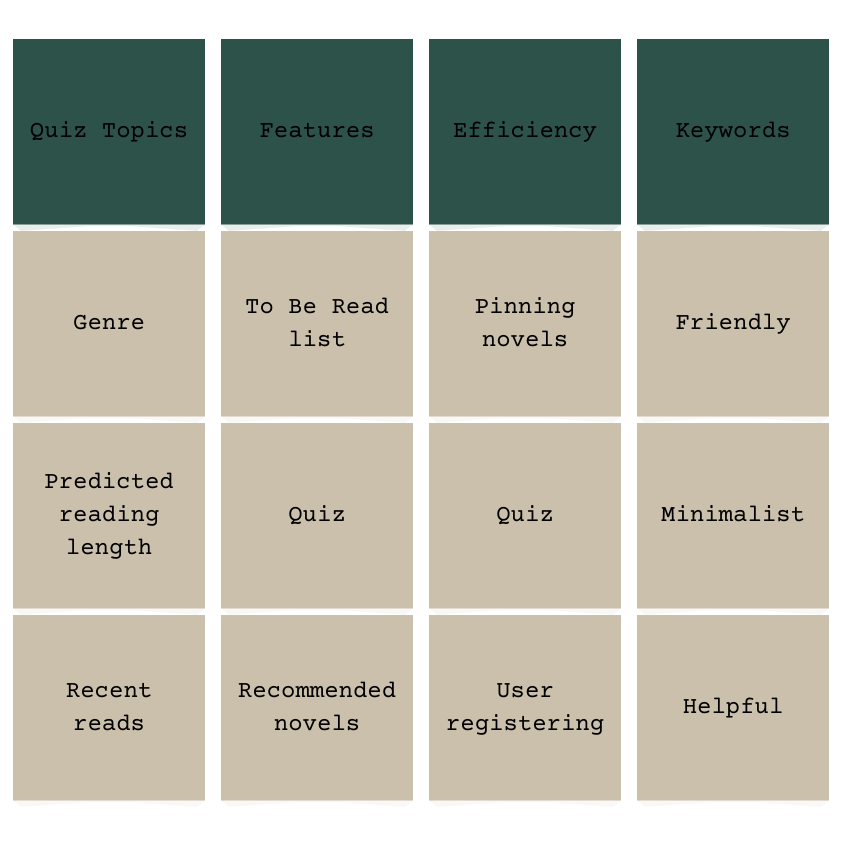
I used affinity mapping to not only map out the general theme of myTBR, but it also helped me identify my main focal points in building the app. The findings I found in this phase helped me identify the path I needed to take for this project.
Competitive Analysis
I looked at several potential competing companies, and although none competed directly with myTBR, they still challenged myTBR on the topic and its popularity. myTBR is presented with the opportunity to capitalize on the To Be Read list presentation to create a minimalist, understanding app.
The majority of the features between competitors were very similar, however, the main differences we noticed were:
- Cluttered Interface vs Minimalistic Interface
- Modern UI
- Focus on new recommendations vs pinned recommendations
Meet the Users

Primary
Name: Trenton
Age: 35
Occupation: Librarian

Secondary
Name: Alex
Age: 19
Occupation: Student
Trenton is a librarian who has limited time to read between time with his family time, his job, and his writing. However, Trenton is always forgetting to check out books on his ever-growing To Be Read list and instead impulse reading random recommendations. He would really like to focus on the books already on his list, but he is always surrounded by recommendations, even on his literature platforms.
Alex is a university student and the time she has for her reading has been cut slim. Her friends from her hometown recommend her novels, but when she is between books, she seems to look everywhere besides her To Be Read list. She would like to finally tackle her list so she can finally talk to her friends about their favorite novels when she visits.
Low-Fidelity Wireframe
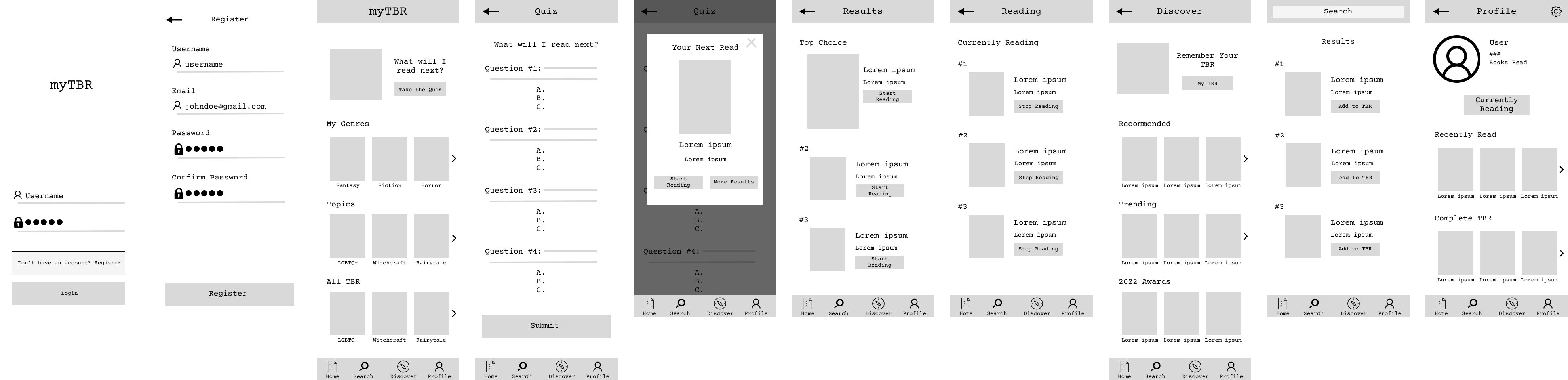
After creating myTBR’s wireframe, I had a general idea of how the app would function and how I could style the brand in a minimal, friendly manner.
Branding Kit
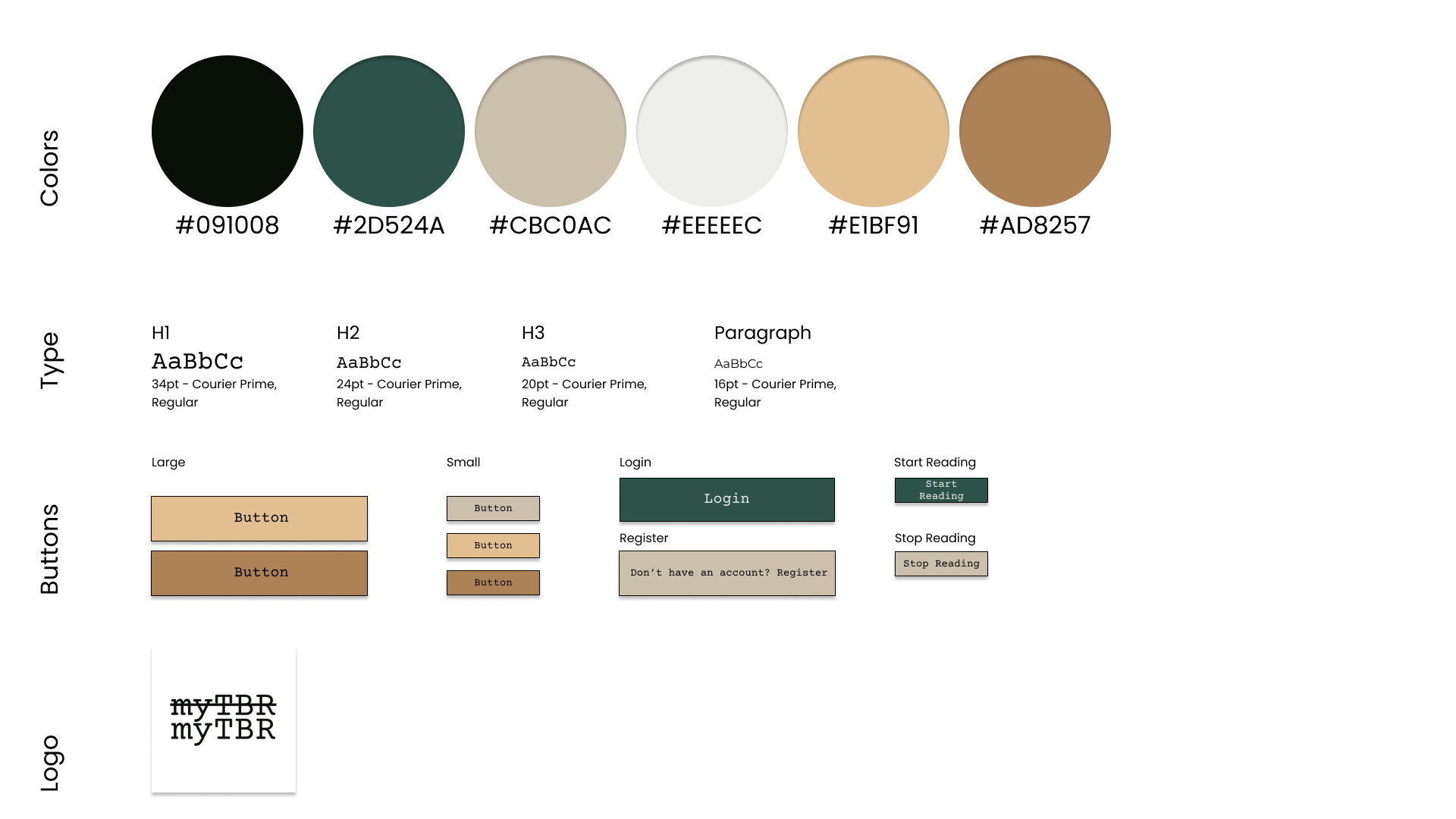
Since I wanted to focus on the comfort and reliance myTBR offers, I chose a palette that naturally eased the viewer’s mind. By incorporating typewriter-like font, I was able to stick to the theme of literature. Also, the logo is simplistic, yet relays the message of checking off books from the users’ To Be Read list.
High-Fidelity Prototype
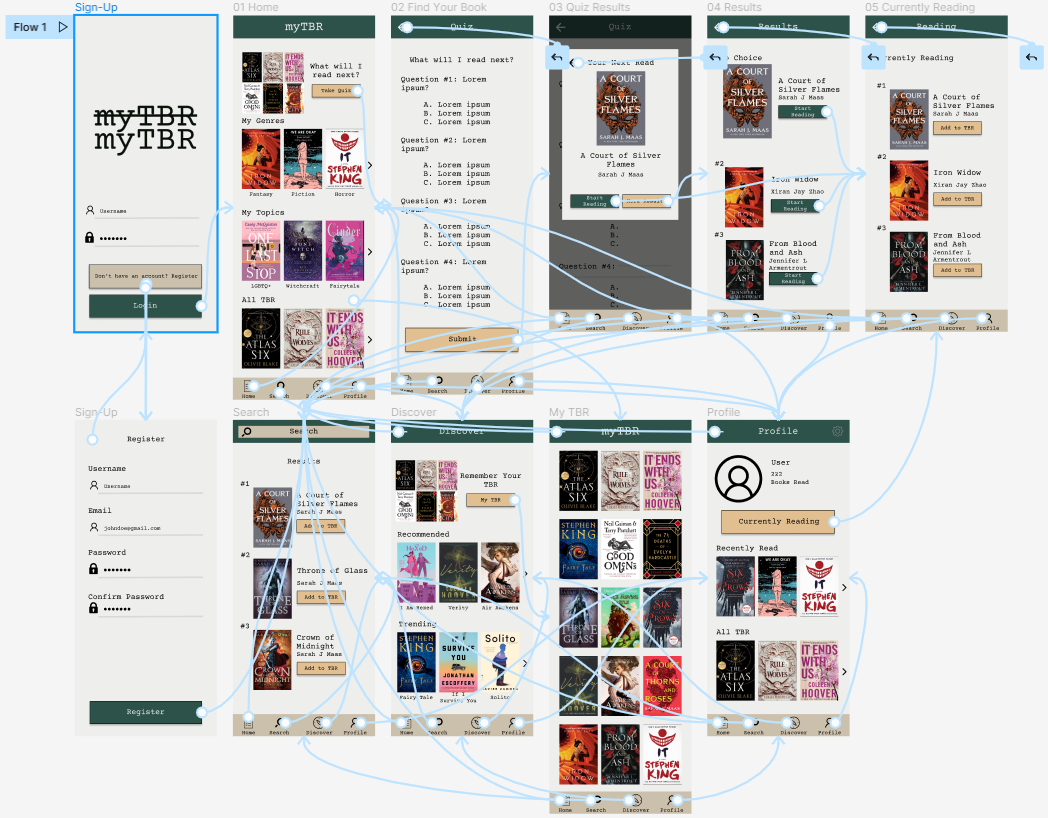
After several rounds of editing and correcting errors found in the low-fidelity prototype, I proudly present the high-fidelity prototype of myTBR.
Takeaways
As an avid reader myself, myTBR was a project I found easily relatable. From my own experience with an ever-looming TBR list, I wanted to build an app that felt inviting and inspiring. From this project, I was able to practice prototyping with Figma, which then led me to create my first stationary menu bar. Although I was not able to fully flesh out various features within myTBR, it’s not to say I won’t try to incorporate them in future projects down the line.
Disclaimer: This project was created purely for fun and as a creative exercise. The customer personas are fictional, and no app was developed.
 Shelby Ann Davis